Short answer: an artist or gallery website on Nantucket needs to do three things. Show the work beautifully at full size on a phone, tell people how to buy or inquire including shipping off-island, and make you findable when a summer visitor searches for your name or your style a month after they saw the piece. It should sit beside your gallery relationships, not compete with them, and it should be yours rather than rented from a social network.
I have designed for the Artists Association of Nantucket and rebuilt my mother's fine art portfolio, so I have thought about this from both sides.
Portfolio vs shop
Decide which one you are before building.
A portfolio site shows the work, tells your story, lists where the work can be seen and bought, and takes inquiries. It is the right choice for artists who sell primarily through galleries or commissions, and for anyone who does not want to manage inventory online.
A shop adds prices, a cart, and payment. It suits artists selling prints, smaller originals, or editions directly, and galleries that want to sell to off-island collectors after the summer ends.
Many island artists want a hybrid: originals shown with "inquire" and prints sold directly. That works well and keeps gallery pricing intact.
The gallery relationship
If a gallery represents you, talk to them before you put prices online. Most galleries are fine with a portfolio site that sends inquiries their way for represented work, and many prefer it. Undercutting the gallery's price on your own site ends relationships.
The clean approach: originals in the gallery are listed on your site with the gallery's name and a link. Prints, studio sales, and commissions are yours. Everyone benefits when your site sends a collector to the gallery on Old South Wharf with a specific painting in mind.
Showing the work
Art sites fail on image quality more than anything else.
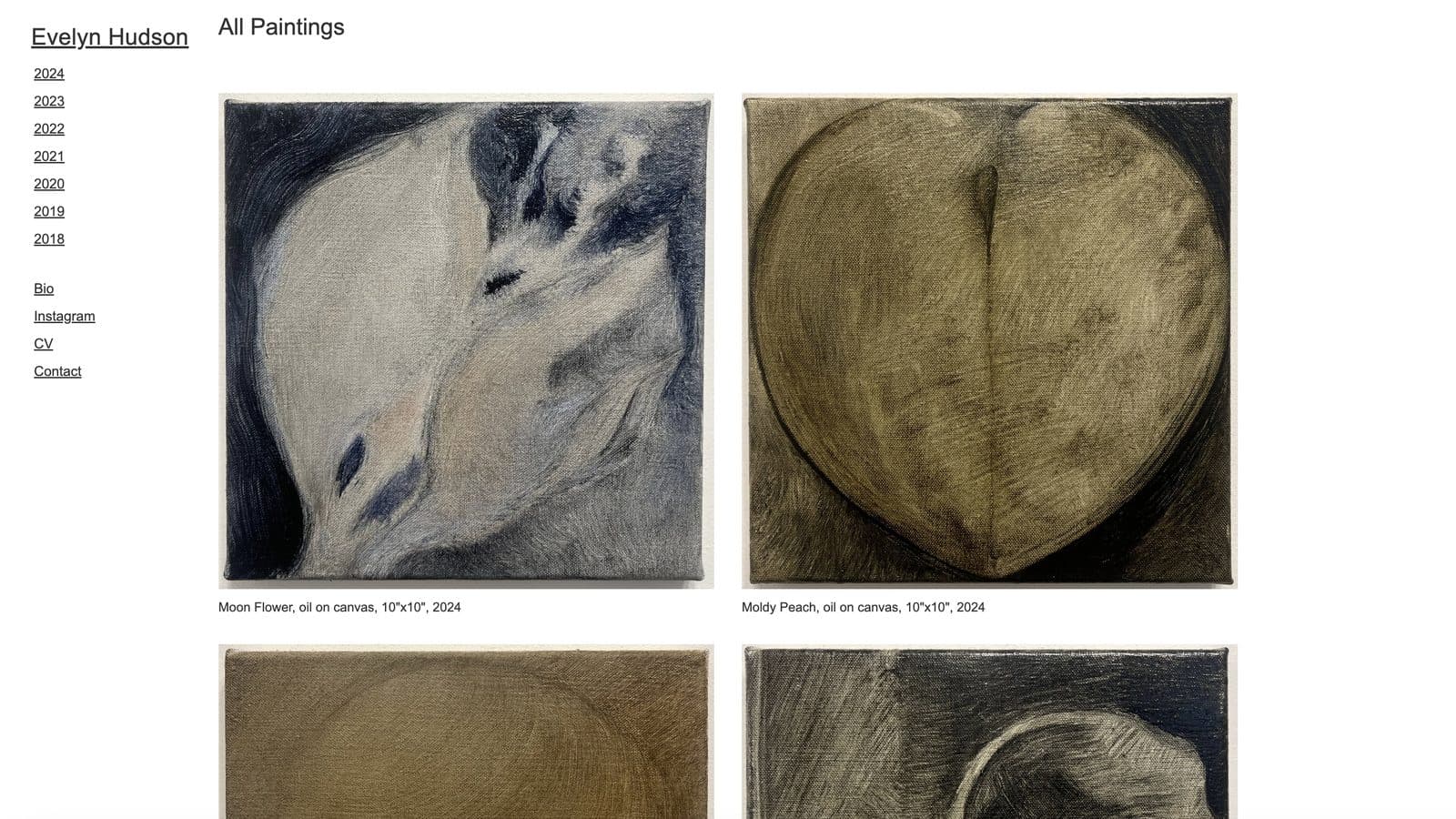
- Photograph work square-on, evenly lit, color corrected. Phone photos in a studio with mixed light look muddy. A proper documentation session is worth it for the pieces you care about.
- Show each piece at large size with a clean background, plus one photo in a room or with a person for scale.
- List title, medium, dimensions, year, and availability for every piece. Collectors and galleries expect it.
- Organize by series or year, not by a single endless grid.
- Keep the site fast. Large images compressed properly load instantly. Uncompressed ones make people leave.
Pricing display
Three honest options.
- Prices shown. Best for prints, editions, and direct sales. Removes friction for buyers.
- Inquire for price. Standard for originals and gallery work. Keep the inquiry form short: name, email, which piece.
- Sold markers. Show sold work with a "sold" label rather than hiding it. It builds credibility and shows collectors what they missed.
Shipping off-island
Most of your buyers leave the island in September. Shipping is part of the product.
- State plainly that you ship, and roughly what it costs for a print versus a framed original.
- Use a service that handles art. For large originals, name the crating company or process.
- Offer local pickup for the season and delivery within the island for larger pieces.
A sentence like "Prints ship anywhere in the US in a week. Originals crated and insured, quote on request" answers the question before it is asked.
Instagram vs an owned site
Instagram is where island artists get discovered, and it should stay that way. It is also rented. The algorithm changes, accounts get locked, and a grid of 800 posts cannot be searched by a collector trying to remember the painting of the Madaket dunes they saw in July.
Your website is the searchable, permanent record. It is what shows up when someone Googles your name. Link the two: Instagram in your site header, your site in your Instagram bio, and every new piece posted to both.
Show calendar and press
A simple page listing upcoming shows, open studios, the Artists Association exhibitions, and the summer festival dates. Add press mentions from the Inquirer and Mirror or N Magazine as they happen. Both give collectors reasons to return and give Google new content to index.
Getting found
Collectors search for artist names, subjects, and places. "Nantucket painter", "Nantucket seascape print", "'Sconset watercolor". Use those phrases naturally in page titles and image descriptions, and keep your name consistent everywhere. The local SEO playbook covers the setup for any island business.
Cost
An artist portfolio site with proper image handling and an inquiry form is a modest project. Adding a print shop increases it. See how much a website costs on Nantucket for real numbers. If you have an old Squarespace or Wix site that has become slow, migration is straightforward and I have done it without losing search rankings. See the work or tell me about your practice.